






Choosing a POS system is an important decision for any restaurant.
Your POS is no longer just a place to accept payments. Modern restaurant POS systems can connect ordering, menus, customer management, reporting, online ordering, employee tools, and other parts of daily operations.
Three names that restaurant owners frequently consider are Toast, Square, and Clover.
But these platforms take different approaches to restaurant technology.
So, how should restaurant owners compare them?
In this guide, we'll look at Toast POS vs Square vs Clover across important restaurant requirements, including POS functionality, online ordering, menu management, payments, integrations, customer management, and overall platform structure.
Toast POS vs Square vs Clover: Quick Overview
| Feature | Toast | Square | Clover |
| Restaurant-focused POS | Yes | Yes | Yes |
| Online ordering | Yes | Yes | Yes |
| Pickup ordering | Yes | Yes | Yes |
| Delivery support | Yes | Yes | Yes |
| Digital menu | Yes | Yes | Yes |
| QR ordering | Yes | Yes | Yes |
| Restaurant management | Yes | Yes | Yes |
| Customer management | Yes | Yes | Yes |
| Marketing tools | Available | Available | Available |
| Third-party integrations | Extensive | Extensive | Extensive |
| Hardware options | Restaurant-focused | Multiple options | Multiple options |
| Multi-location tools | Available | Available | Available |
| Pricing structure | Plan/add-on dependent | Plan/add-on dependent | Plan/add-on dependent |
Important: Features, pricing, processing rates, hardware availability, and plan requirements can change. Restaurant owners should confirm the current terms directly with each provider before signing a contract.
1. Toast POS
Toast is designed specifically around restaurant operations.
Its platform includes POS hardware and software along with additional restaurant tools.
Toast currently offers online ordering that can support direct pickup and delivery orders, with orders flowing into the Toast POS. Its online ordering pages can also be branded with the restaurant's logo and ordering experience.
Toast features include:
- Restaurant POS
- Online ordering
- Pickup and delivery
- Menu management
- QR/mobile ordering
- Marketing
- Loyalty
- Gift cards
- Inventory tools
- Reporting
- Employee tools
- Third-party integrations
Toast also offers restaurant-specific hardware and says its platform has more than 200 integrations.
Toast pricing
Toast currently lists different ways to get started, including a Starter Kit beginning at $0/month for qualifying new single-location customers and a POS option beginning at $69/month, while more comprehensive configurations use custom pricing. Hardware, processing, add-ons, and eligibility requirements can affect the overall cost.
For restaurant owners, the important point is to evaluate the complete cost of the system, not simply the advertised starting price.
2. Square for Restaurants
Square approaches restaurant technology through its broader Square ecosystem.
Square provides restaurant POS functionality along with payment processing, online ordering, customer tools, marketing capabilities, and integrations.
This can be attractive to restaurants that want to connect their POS with other Square business tools.
Square can support areas such as:
- Restaurant POS
- Online ordering
- Menu management
- Payments
- Customer management
- Marketing
- Loyalty
- Reporting
- Employee management
- Hardware
- Third-party integrations
One important consideration with Square is understanding which features are included in the specific restaurant plan you select and which require additional services.
3. Clover
Clover provides POS hardware and restaurant software through its Clover ecosystem.
Clover's restaurant offering includes POS functionality, online ordering, menu management, payments, reporting, employee tools, and customer-related features.
Clover currently lists online ordering for pickup and delivery and says its online ordering solution has no setup or subscription fee, although delivery fees may apply and standard payment-processing and software costs can still apply.
Clover features include:
- Restaurant POS
- Online ordering
- Pickup and delivery
- QR ordering
- Menu management
- Customer database
- Promotions
- Loyalty
- Reporting
- Employee permissions
- Hardware
- Third-party integrations
Clover's Restaurant Growth plans also include features such as table mapping, bill splitting, QR-code ordering and payment, item modifiers, stock tracking, and real-time reporting.
Toast vs Square vs Clover: Online Ordering
Online ordering is now an important consideration when choosing restaurant software.
Toast
Toast offers branded direct online ordering with pickup and delivery options. Orders can flow into the Toast POS and kitchen workflow.
Square
Square provides online ordering as part of its broader restaurant ecosystem, allowing restaurants to connect online ordering with Square's POS and other business tools.
Clover
Clover offers online ordering for pickup, delivery, and dine-in use cases. Online orders can be routed into the Clover POS and kitchen workflow.
What should restaurants compare?
Look at:
- Online ordering fees
- Website integration
- Menu synchronization
- Pickup management
- Delivery options
- Customer data
- Ordering customization
- Marketing integration
Don't assume that two platforms with "online ordering" on their feature list work exactly the same way.
Toast vs Square vs Clover: Menu Management
Restaurant menus change frequently.
You may need to update:
- Prices
- Descriptions
- Modifiers
- Categories
- Photos
- Availability
- Specials
- Seasonal items
Toast supports menu management across its POS and digital ordering ecosystem.
Clover also provides item and category management, modifiers, labels, and the ability to mark items as sold out.
Square also provides restaurant menu and catalog management.
When comparing systems, test how quickly your staff can make a real menu change.
Toast vs Square vs Clover: QR Ordering
QR ordering can support both dine-in and digital ordering.
Toast offers Mobile Order & Pay, allowing guests to scan a QR code, browse the menu, order, and pay from their phones.
Clover also supports QR-code ordering and payment as part of its restaurant functionality.
Square provides QR-based ordering options within its restaurant ecosystem.
If QR ordering matters to your restaurant, test the customer experience yourself rather than comparing feature names alone.
Toast vs Square vs Clover: Hardware
Hardware is another major consideration.
Toast
Toast offers restaurant-specific hardware designed for restaurant environments, including terminals and handheld devices.
Square
Square offers a range of hardware options that can be configured around different business and restaurant setups.
Clover
Clover provides restaurant hardware configurations ranging from countertop systems to handheld devices and more advanced setups. Its current restaurant bundles include options such as Station Solo, Flex handhelds, and Station Duo.
When comparing hardware, consider:
- Number of terminals
- Handheld ordering
- Kitchen printers
- Customer displays
- Receipt printers
- Cash drawers
- QR ordering
- Hardware costs
- Replacement costs
Toast vs Square vs Clover: Integrations
Integrations can become important as a restaurant grows.
You may eventually need connections with:
- Accounting
- Payroll
- Delivery
- Reservations
- Marketing
- Loyalty
- Inventory
- Catering
- Online ordering
Toast currently advertises 200+ integrations.
Clover also uses an ecosystem that includes third-party applications and integrations.
Square has its own ecosystem of business applications and integrations.
The right choice depends on the specific applications your restaurant already uses.
Toast vs Square vs Clover: Pricing
Pricing is one area where restaurant owners need to look beyond the headline number.
Your total cost can include:
- POS software
- Hardware
- Payment processing
- Online ordering
- Delivery
- Marketing
- Loyalty
- Payroll
- Inventory
- Additional locations
- Additional terminals
- Third-party integrations
Toast, for example, currently publishes multiple pricing configurations rather than one universal restaurant price.
Clover likewise offers different restaurant configurations, and its pricing pages note that standard processing and software fees apply.
For Square, pricing also depends on the selected products, hardware, and payment-processing setup.
The important question isn’t:
"Which POS has the lowest advertised price?"
Instead ask:
"What will my restaurant actually pay for the complete system I need?"
Toast vs Square vs Clover for Small Restaurants
Small restaurants often need to balance functionality with simplicity.
Before choosing a POS, consider:
- Number of locations
- Number of employees
- Order volume
- Online ordering requirements
- Delivery requirements
- Hardware needs
- Marketing requirements
- Budget
- Future growth
A small restaurant may not need every enterprise-level feature.
At the same time, choosing a system that cannot support future requirements may result in another software migration later.
Toast vs Square vs Clover for Growing Restaurants
Growing restaurants may need more advanced capabilities.
These can include:
- Multiple locations
- Centralized menu management
- Employee management
- Reporting
- Inventory
- Marketing
- Customer data
- Online ordering
- Third-party integrations
Toast specifically offers multi-location management, while Square and Clover also provide tools that can support businesses operating across locations.
Restaurant owners should verify exactly which multi-location features are included in the plan they are considering.
Toast vs Square vs Clover: Questions to Ask Before Choosing
Before signing up, ask each provider:
1. What is the complete monthly cost?
Include software, hardware, processing, and add-ons.
2. Are there contracts?
Understand the agreement length and cancellation terms.
3. What does online ordering cost?
Check whether ordering has separate fees.
4. How does delivery work?
Determine whether delivery is handled directly, through integrations, or through additional services.
5. Can I use my existing hardware?
Compatibility can affect your switching costs.
6. Can I export my restaurant data?
This matters if you change platforms in the future.
7. What support is included?
Ask about hours, onboarding, training, and technical support.
8. Can the system grow with multiple locations?
If expansion is part of your plan, evaluate this before choosing.
Toast vs Square vs Clover: Which Type of Restaurant Software Should You Choose?
Rather than looking for one universal answer, restaurant owners should match the platform to their operational requirements.
| Restaurant Requirement | What to Prioritize |
| Simple POS | Ease of use |
| Full restaurant operations | Restaurant-specific features |
| Online ordering | Direct ordering integration |
| Takeout | Pickup workflow |
| Delivery | Delivery management |
| Dine-in | Tableside and QR ordering |
| Multiple locations | Centralized management |
| Marketing | Customer and campaign tools |
| Integrations | Compatible third-party ecosystem |
| Lower complexity | Simple setup and workflow |
| Growth | Scalable software and hardware |
The best way to compare platforms is to test the workflows that matter most to your restaurant.
An Alternative to Comparing POS Systems: All-in-One Restaurant Software
Restaurant owners don't necessarily need to choose software based only on POS functionality.
Some restaurants are looking for a broader system that focuses on:
- Online ordering
- Restaurant websites
- Digital menus
- Reservations
- Catering
- Delivery
- Customer management
- Marketing
- QR ordering
This is where an all-in-one restaurant management and ordering system can be useful.
Instead of building your restaurant's technology stack around the POS alone, you can evaluate the complete digital experience.
How myRestro Fits Into the Comparison
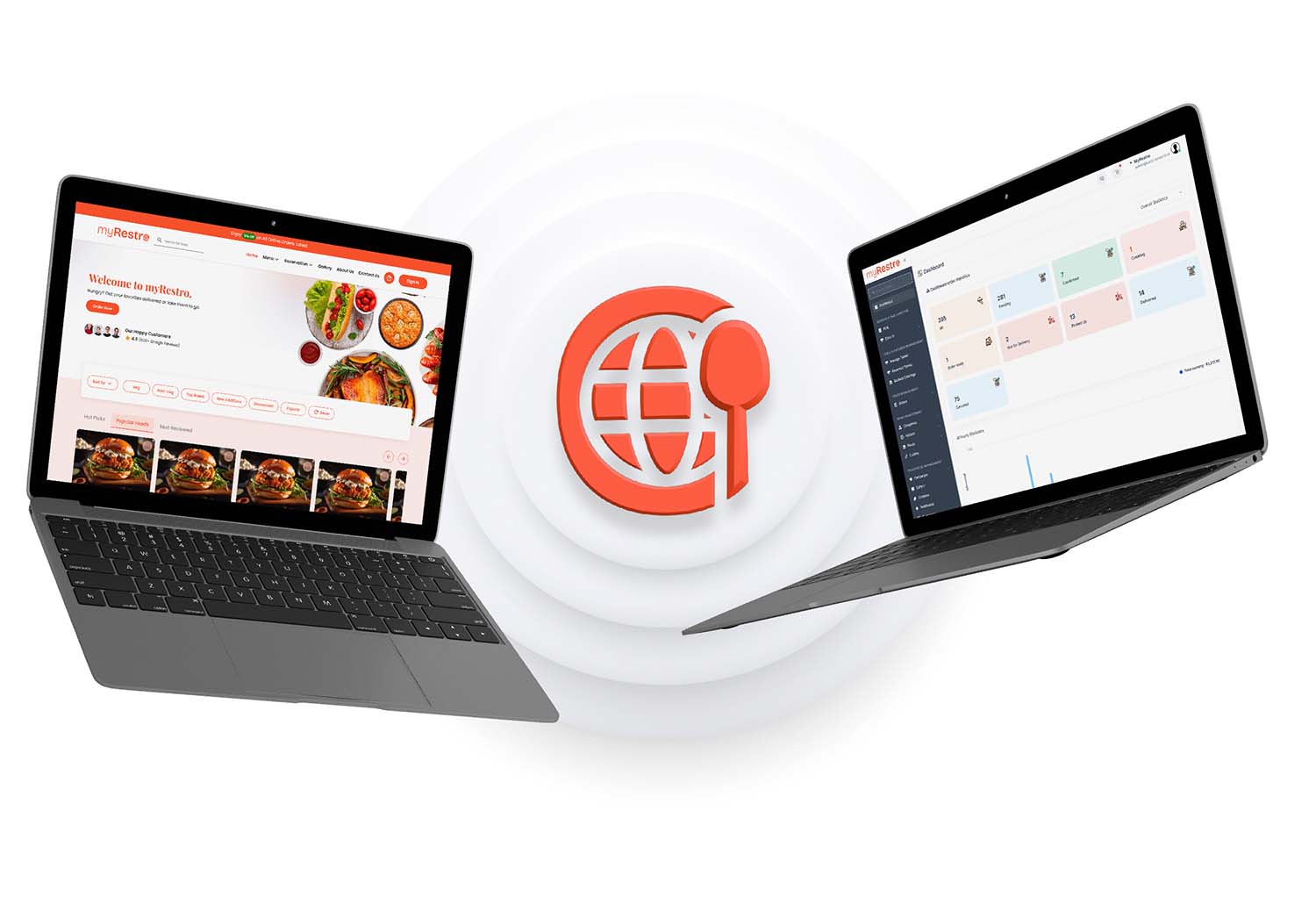
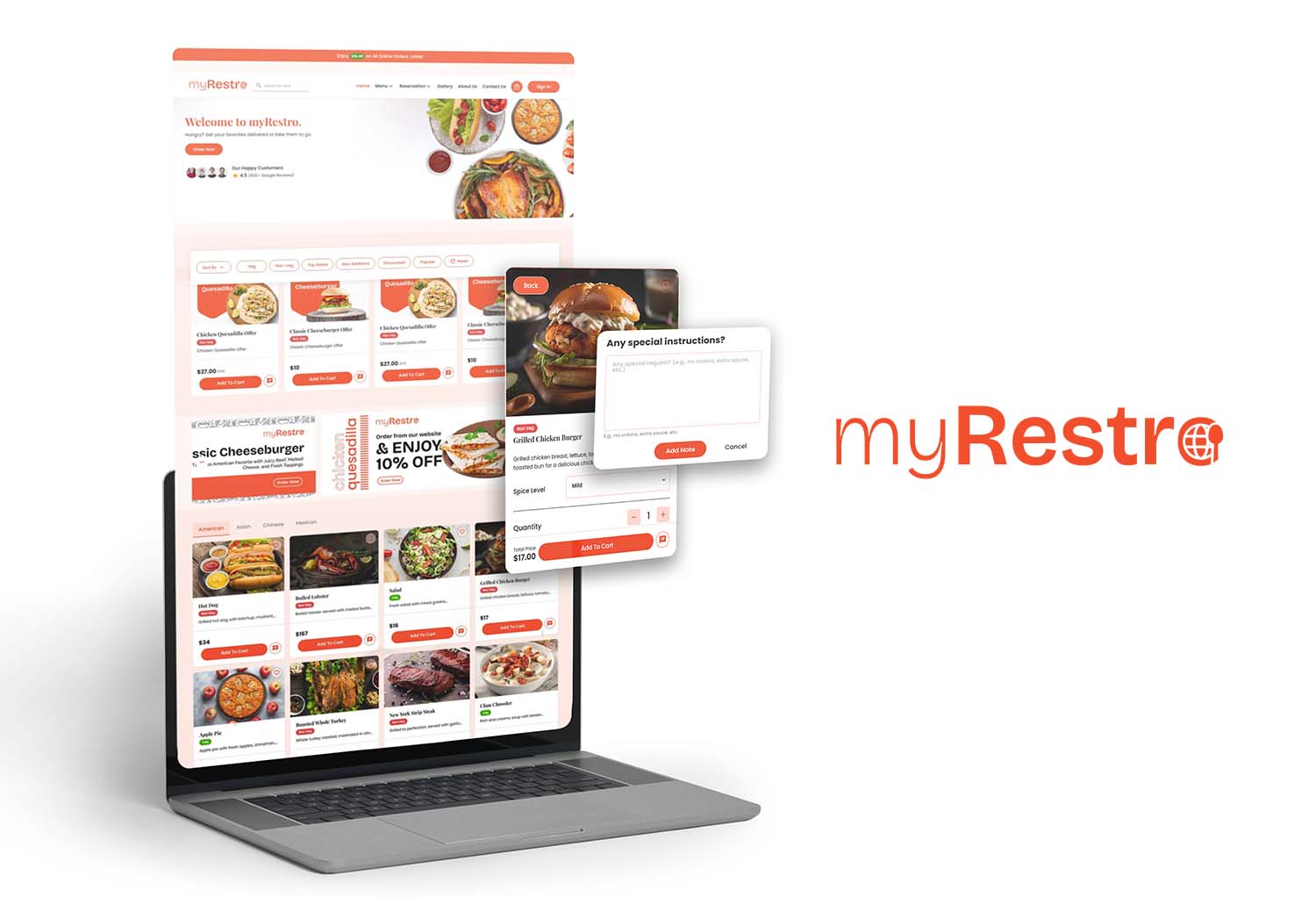
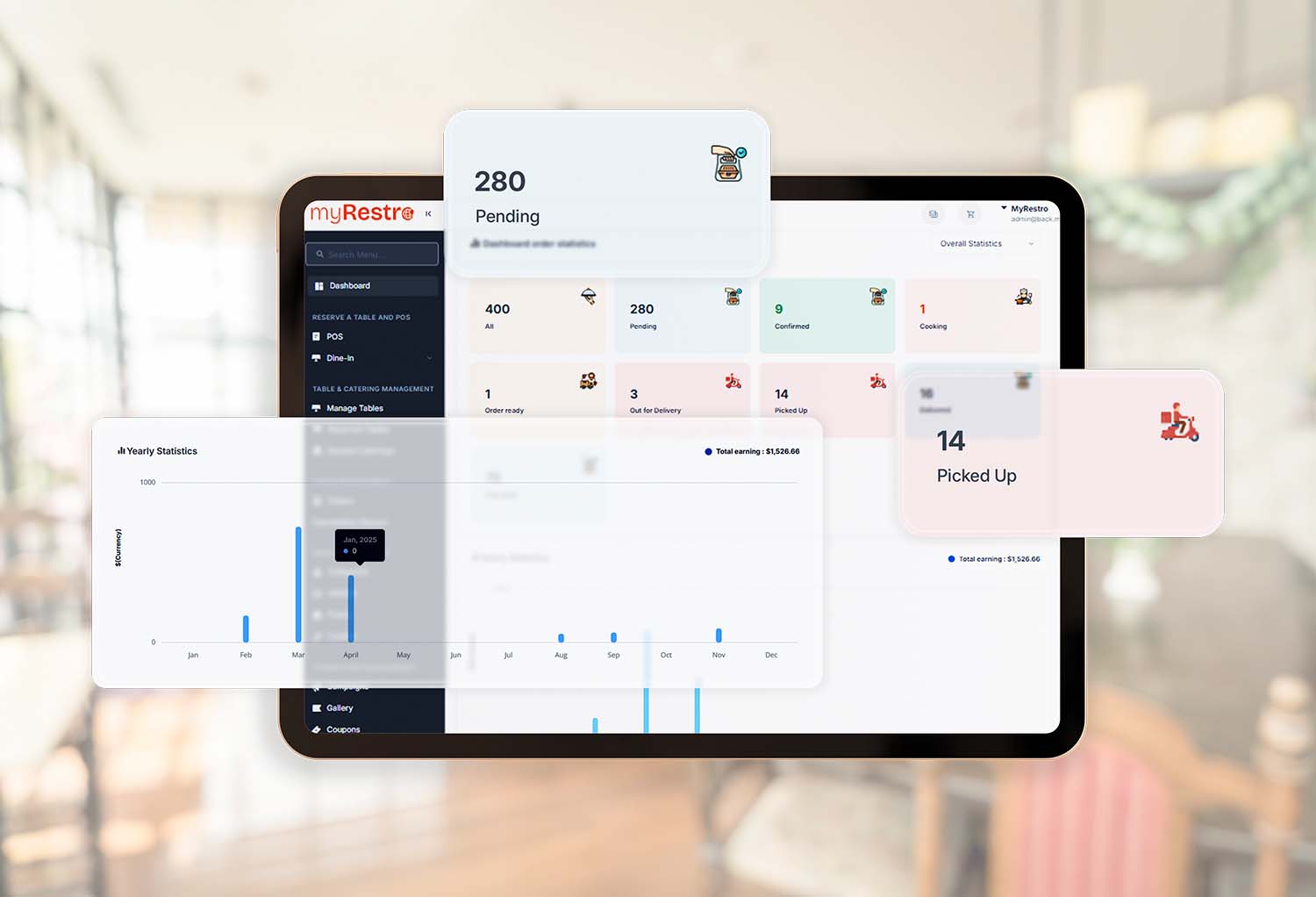
myRestro takes an all-in-one approach to restaurant management and online ordering.
Instead of focusing only on the payment terminal, myRestro brings several restaurant functions together.
myRestro includes:
- Commission-Free Online Ordering
- Branded Restaurant Website
- Digital Menu Management
- QR Code Menu
- Table Reservation Management
- Catering Management
- Delivery & Pickup Management
- Email & SMS Marketing
- Customer Management
- Restaurant Management Tools
For restaurants comparing POS-centered systems, myRestro can be considered when the priority is building a broader online ordering and restaurant management setup.
👉 Related: myRestro vs Toast: Which Restaurant Software Is Better for Independent Restaurants? (2026)
Frequently Asked Questions
Is Toast better than Square for restaurants?
Toast and Square offer different approaches to restaurant technology. Compare their specific POS features, online ordering, hardware, processing costs, integrations, and restaurant-management requirements before choosing.
Is Clover good for restaurant online ordering?
Clover offers online ordering for pickup, delivery, and dine-in use cases, with online orders connected to its POS workflow.
Which is cheaper: Toast, Square, or Clover?
There isn't one universal price because total costs depend on software plans, hardware, payment processing, online ordering, add-ons, and other services.
Do Toast, Square, and Clover offer online ordering?
Yes. All three provide online ordering capabilities, although the features, pricing, integrations, and ordering workflows differ.
Can these POS systems handle QR ordering?
Yes. Toast and Clover currently offer QR-based ordering and payment features, while Square also supports QR-related ordering options depending on the product configuration.
Should a restaurant choose a POS or all-in-one restaurant management platform?
That depends on the restaurant's needs. If you need more than payment processing, compare the full range of ordering, website, marketing, reservation, catering, delivery, and customer-management tools.
Final Thoughts
Toast, Square, and Clover all provide restaurant POS solutions, but their products, pricing structures, hardware, integrations, and feature combinations differ.
The right comparison isn't simply about choosing a familiar brand.
Restaurant owners should evaluate:
- POS functionality
- Online ordering
- Menu management
- Pickup and delivery
- Hardware
- Payment processing
- Marketing
- Customer management
- Integrations
- Multi-location capabilities
- Total cost
Most importantly, evaluate the software using your actual restaurant workflow.
A system should make everyday operations easier rather than add unnecessary complexity.
Explore myRestro for Restaurant Management & Online Ordering
If you're comparing restaurant software beyond traditional POS systems, myRestro provides tools designed around online ordering and broader restaurant management.
Get started with:
- 90-Day Free Trial
- Commission-Free Online Ordering
- No Setup Fees
- Branded Restaurant Website
- Digital Menu & QR Code Menu
- Pickup & Delivery Management
- Table Reservations
- Catering Management
- Email & SMS Marketing
- Customer Management
Contact: +1 (562) 366-0646
Email: [email protected]
Website: https://myrestro.io
0 Comments